
Start here
Can Australians buy property in New Zealand?
Yes. If you're an Australian citizen, you can buy a house in New Zealand. Existing homes included. You get the same deal as a Kiwi: no consent process, no stamp duty, no land tax, no foreign-buyer surcharge. Most Australians have no idea this is the case.
Why does everyone think Australians can't buy here?
Because in 2018, New Zealand banned foreign buyers from buying existing homes. That story went around the world.
What didn't go around the world was the exemption. Under the Overseas Investment Act, Australian citizens are treated like New Zealanders. Singaporeans get a similar deal through a separate trade agreement. Everyone else is locked out.
So you've got a strange situation. Australians can freely buy into the New Zealand market, but the headline they remember says they can't.
Then in March 2026 the rules loosened a little for wealthy investor-visa holders, who can now buy one home worth over NZ$5m. That put the topic back in the news and confused things further. Nothing changed for Australians. You were never banned.
Here's the actual mechanism, if you want it. The Overseas Investment Act defines who counts as an “overseas person” for residential land. Australian citizens are carved out under long-standing trans-Tasman arrangements. So the restrictions never apply to you in the first place. There's no form to fill in and no certificate to get. Your lawyer confirms you qualify as part of normal conveyancing. That's it.
| Buyer | Existing homes | New apartments* | Commercial | Farmland |
|---|---|---|---|---|
| NZ / Australian / Singaporean citizens | Yes | Yes | Yes | Conditions |
| Australian / Singapore PRs (offshore) | No | Yes | Yes | Conditions |
| NZ residence visa, ordinarily resident | Yes | Yes | Yes | Conditions |
| Investor visa (AIP) holders | Conditions | Yes | Yes | Conditions |
| Everyone else | No | Yes | Yes | No |
*New apartments: off-the-plans units in large developments holding an exemption certificate. Farmland and most rural land over 5ha is sensitive land - Overseas Investment Office consent, for everyone offshore. Investor-visa holders: one existing home above NZ$5m.
Is there a catch?
Three things to know.
You need to be a citizen, not a permanent resident. The clean exemption is for Australian citizens, wherever you live. If you're an Australian permanent resident with a different citizenship, it's different. Broadly, you need to be ordinarily resident in New Zealand first. That means living here for a year or more, being here most of that time, holding a residence-class visa and being a tax resident. If your household is one citizen and one PR, buy in the citizen's name, or get advice on joint ownership before you sign anything.
Rural land has its own rules, even for citizens. Farmland and most non-urban land over 5 hectares is “sensitive land”. It needs Overseas Investment Office consent, whatever passport you hold. A beach house, a townhouse, an apartment or a section in town? Not affected. A 40-hectare high-country block? Affected. Our rural guide walks through the thresholds.
Trusts and companies change things. If you buy through an Australian family trust or company, the analysis changes. An entity can count as an “overseas person” even when the people behind it are exempt. Plenty of Australians still buy through structures for tax and asset-planning reasons. Just get your NZ lawyer to check the structure against the rules before you make an offer. Not after.
How much does it cost to buy?
Less than you're used to. New Zealand got rid of stamp duty in 1999 and never replaced it. There's no land tax, no vacancy tax, no foreign-owner levy and no FIRB-style application fee.
Here's the full list of what you'll pay on top of the price:
- A lawyer: NZ$1,500 to $3,000
- A LIM report from the council: a few hundred dollars
- A builder's report: a few hundred dollars
- Your lender's standard fees, if you borrow
That's it. The six-figure tax bill Australians are used to budgeting for doesn't exist here.
Let's put numbers on it. Say you buy a NZ$2 million house. In New South Wales, the transfer duty on an equivalent purchase would be about A$95,000. In New Zealand it's $0.
NZ$1.5m purchase
NZ$2m purchase
NZ$3m purchase
Indicative NSW transfer duty for an owner-occupier, at approximate AUD equivalents of each NZ price. No foreign surcharge is included; as a citizen buyer you would not pay NZ's anyway. Victoria usually runs higher. The NZ figure is exact: zero.
Two more things work in your favour. The Australian dollar has bought between NZ$1.08 and NZ$1.15 for most of the last few years, so the sticker price shrinks before you've even started negotiating. And holding costs are low. Council rates are roughly NZ$2,500 to $6,000 a year for most holiday homes, plus insurance, plus management if you rent it out. There's no annual land tax.
What about tax once I own it?
This is the bit most guides skip. We won't.
If you're an Australian tax resident, you still answer to the ATO. You declare the NZ rental income in Australia and claim a credit for the tax you paid in New Zealand. When you eventually sell, it's a capital gains event in Australia, exactly like an Australian holiday home. The 50% discount generally applies after 12 months.
New Zealand's side is light. There's no general capital gains tax. The two-year bright-line test catches quick flips, and that's about it. The double tax agreement means nothing gets taxed twice.
We go through the whole thing in the CGT truth. Read it before you buy, not after. You'll run into it eventually either way.
$0
Stamp duty, land tax and foreign-buyer surcharge in New Zealand
2 yrs
The bright-line window - hold longer and a standard sale is typically untaxed in NZ
~1.10
What one Australian dollar has typically bought in NZD in recent years
How does the buying process work?
Mostly like Australia, with a few differences.
More homes sell by auction or deadline than at an advertised price. Due diligence runs on a council LIM report and a builder's report. And lawyers do the conveyancing, not conveyancers.
You don't need to set foot in the country for any of it. We'd still suggest you come over at least once. That's the fun part.
- 1
Set up the rails
Week 0-2Engage a NZ property lawyer, gather certified ID and source-of-funds paperwork, open an FX account, and get lending pre-approved if you will borrow.
- 2
Find and research
Weeks to monthsPortals plus our listings and area guides. On a serious candidate: LIM report, builder's report, hazard-map check, title review - the due-diligence toolkit covers all six checks.
- 3
Offer or bid
Day 0Standard sale and purchase agreement with your conditions - or an auction, which is unconditional on the day, so every check happens beforehand.
- 4
Unconditional + deposit
Day 0-14Customarily 10% to the agent's trust account once conditions clear. Book your currency conversion now, not in settlement week.
- 5
Settlement
Week 4-6Funds land in your lawyer's trust account two or three business days early; title transfers; insurance starts settlement day; keys released.
Every step above has its own guide: how to buy NZ property for the full process, financing from Australia for the lending side, and moving the money for getting your dollars across. That last one matters more than people think. On A$2 million, the difference between converting badly and converting well is tens of thousands of dollars.
Where do Australians actually buy?
Two places, mostly.
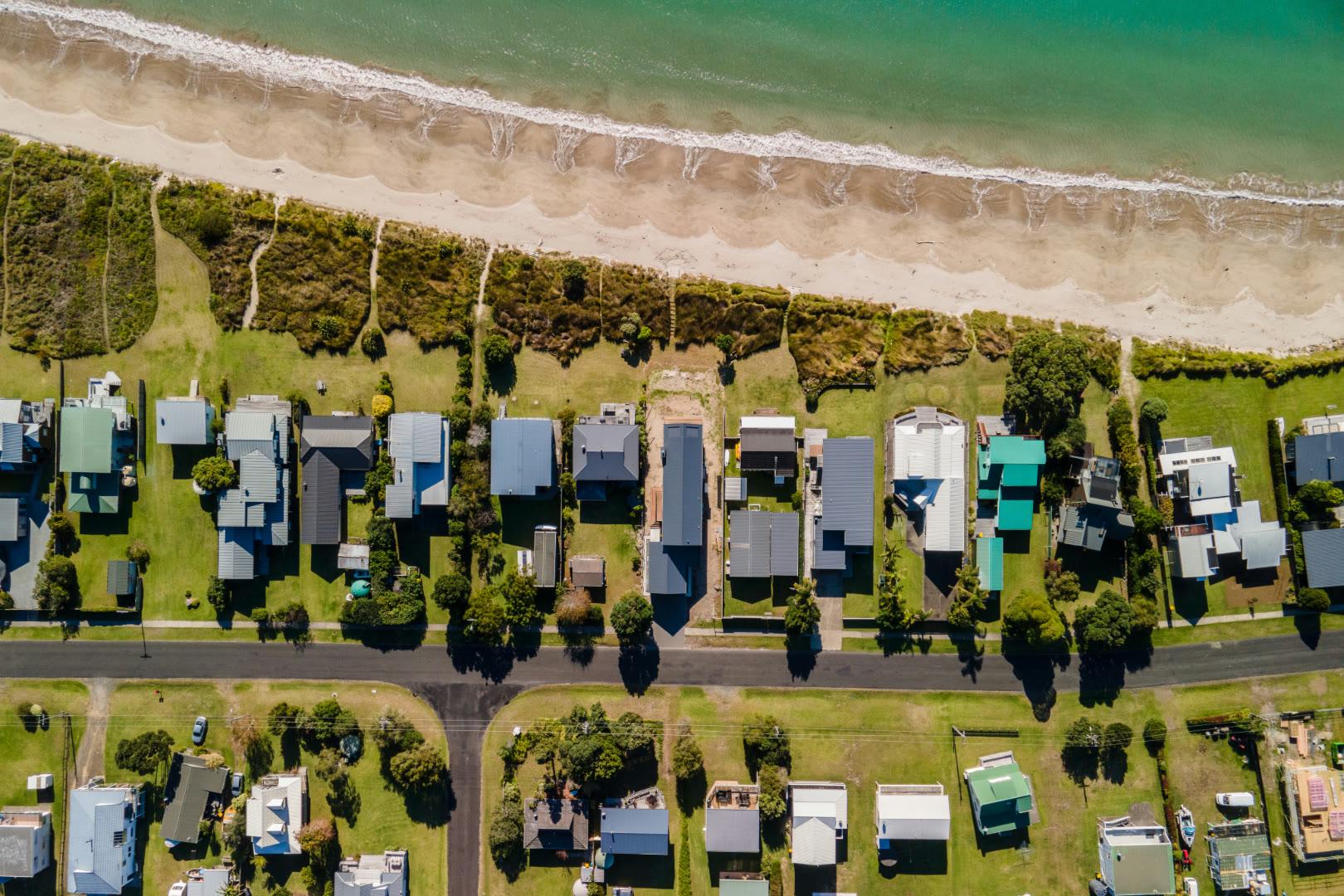
The east-coast crowd buys on the Coromandel, at Pauanui and Whangamata, or on Auckland's weekend coast at Omaha. These are flat, white-sand beach towns two to three hours from an international airport. They cost a fraction of the equivalent Australian beach town.
The alpine crowd flies straight into Queenstown from four Australian cities. It's the one market where short-stay income can genuinely cover a well-bought property. Or they go over the hill to Wanaka, which is quieter.
Every area page has price bands, buying notes and links to the council's own research.
Want the whole thing in one place?
The free guide answers the seven questions Australian buyers ask us most. The rules, the exchange rate, both tax systems, financing, holding costs and moving money. One PDF. Or take the two-minute quiz and we'll tell you your pathway.